Why Equipment Selection Defines a Rehabilitation Programme
When the management team at a 200-bed hospital in Salem began planning a dedicated physiotherapy wing, they faced a question that every growing healthcare facility eventually confronts: which rehabilitation equipment categories are essential, which are secondary, and how do you evaluate quality before committing a significant capital budget? After speaking with department heads across three facilities, they turned to Prime Rehab Industries in Chennai and received not just a product list but a structured framework for thinking through the decision.
This guide applies that same framework to any hospital, clinic, or rehabilitation centre in Tamil Nadu or across India evaluating equipment for the first time or upgrading an existing department.
The Core Categories of Rehabilitation Equipment
Rehabilitation equipment spans a wide range of clinical applications. A well-equipped facility will typically have representation across all major categories, scaling the number of units to patient volume and case mix.
Treatment and Therapy Tables
The physiotherapy treatment table is the foundation of any rehabilitation department. Adjustable-height tables allow therapists to work at the correct ergonomic position regardless of patient size, and the ability to position sections independently supports a wide range of manual therapy techniques. Prime Rehab Industries manufactures treatment tables in multiple configurations: flat, two-fold, three-fold, and Bobath variants for neurological rehabilitation. All are built on heavy-gauge steel frames with high-density foam and clinical-grade rexine upholstery.
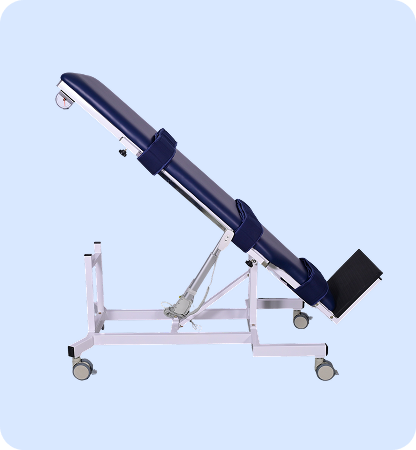
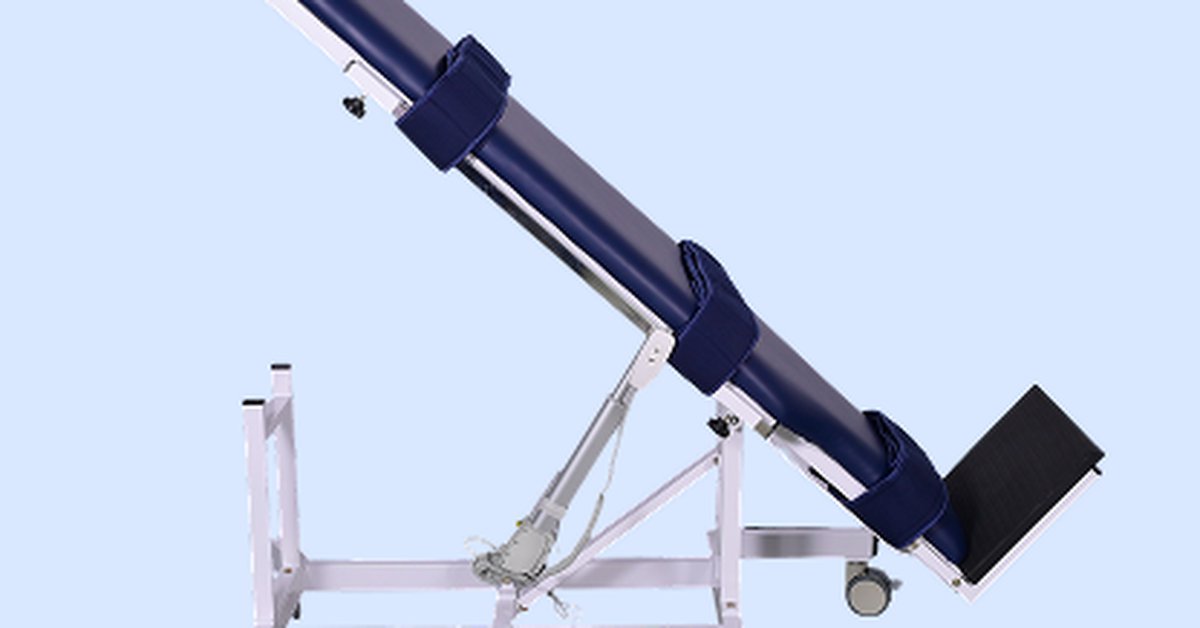
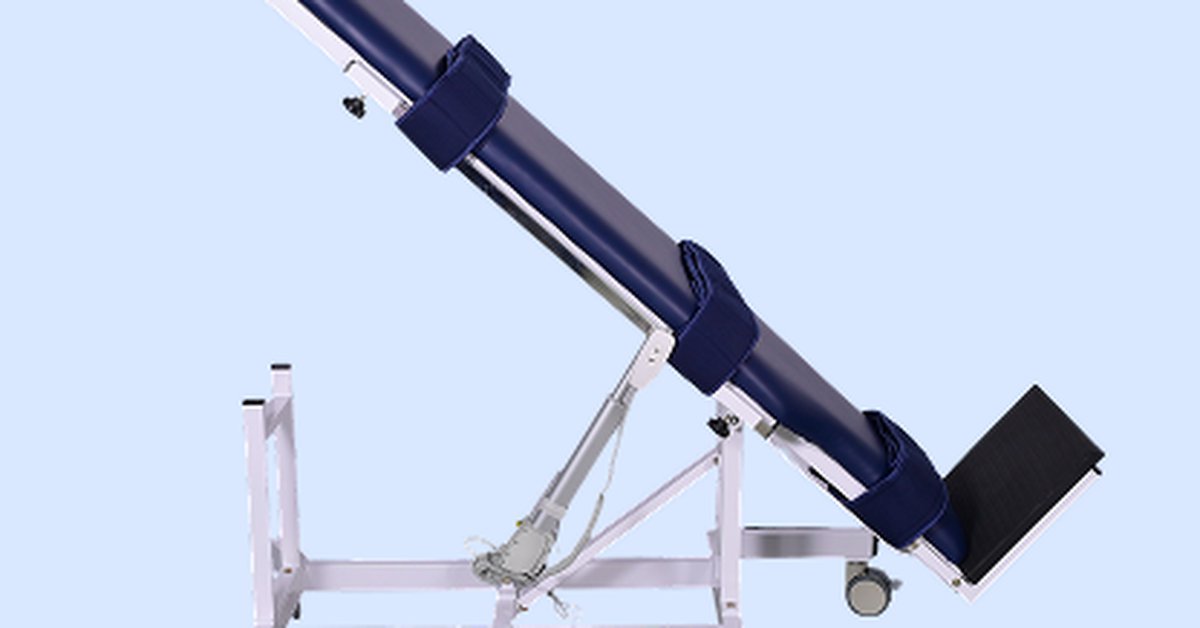
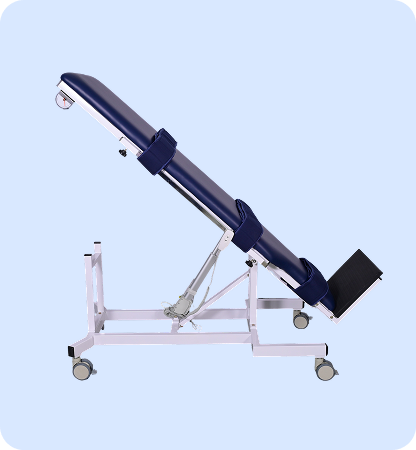
Tilt Tables
A tilt table allows a patient to be gradually moved from horizontal to vertical, introducing gravitational load in controlled increments. This is a critical tool for patients recovering from prolonged immobilisation, neurological conditions, or cardiac events. The tilting table from Prime Rehab Industries features a fixed-height base with precision angle adjustment, supporting safe orthostatic reconditioning across all patient age groups.
Traction Units
Cervical and lumbar traction units decompress spinal structures, reducing nerve impingement and associated pain. For patients with disc prolapse, spondylosis, or post-surgical spinal conditions, traction therapy enables active rehabilitation that would otherwise be limited by pain. Consistent, calibrated pull force is essential traction units that drift or lose calibration under repeated use compromise both safety and therapeutic outcomes.
Unweighing and Gait Training Systems
Unweighing systems allow patients to practise walking with a portion of their body weight supported. For stroke patients, those recovering from lower-limb surgeries, and individuals with neurological conditions affecting gait, this equipment enables earlier mobilisation and more intensive gait training than would otherwise be safe. The result is measurably faster return to independent ambulation.
Parallel Bars and Mobility Aids
Parallel bars are the standard framework for gait training in inpatient and outpatient rehabilitation. Fixed-height and adjustable models serve different facility types. For facilities treating a mix of adult and paediatric patients, adjustable-height bars offer greater versatility. Mobility aids including walking frames, crutches, and specialised supports round out the continuum of ambulation training tools.
How to Evaluate Rehabilitation Equipment Before Purchasing
Equipment quality directly determines clinical outcomes, staff safety, and total cost of ownership. When reviewing rehabilitation equipment from any supplier, apply these four criteria:
Structural Load Rating
Treatment tables and tilt tables must carry patient weight plus the force applied by therapists during manual techniques. A load rating below clinical requirements creates both safety risk and premature structural fatigue. Prime Rehab Industries specifies load ratings for every product and can provide documentation on request.
Adjustment Range and Ease of Use
A treatment table with a narrow height range or a traction unit with imprecise controls limits what a therapist can accomplish. Equipment designed with clinician workflow in mind reduces session setup time, allows precise repeatability across sessions, and reduces therapist fatigue over a full clinical day.
Upholstery and Surface Durability
In high-use clinical environments, upholstery is subject to constant patient contact, cleaning agents, and mechanical stress. Foam that collapses under sustained use or rexine that cracks within months of installation creates both patient comfort issues and infection control risks. Prime Rehab Industries uses high-density foam and double-stitched clinical-grade rexine rated for healthcare environments.
Supplier Service Support
Rehabilitation equipment requires periodic maintenance. A supplier that cannot reach your facility within a reasonable time frame or does not stock spare parts locally creates operational risk. For facilities in Tamil Nadu, sourcing from Prime Rehab Industries in Chennai means service support is accessible and lead times for replacement parts are short.
For a supplier-focused perspective on sourcing in the Chennai region, see our post on the best rehabilitation equipment suppliers in Chennai. For a product-by-product breakdown suitable for procurement planning, see top physiotherapy equipment for clinics and hospitals in India.
What Healthcare Facilities Say
"We were setting up a new physiotherapy department and had no reference point for what equipment was truly necessary versus nice-to-have. Prime Rehab Industries walked us through every category, recommended a phased procurement plan, and delivered on time. Eighteen months later, the department is running at full capacity and the equipment has required zero unscheduled maintenance."
— Vijay Anand, Clinic Director, Salem
"We upgraded from older imported tables to Prime Rehab Industries treatment tables across our rehabilitation ward. The build quality is noticeably better the frames do not flex, the height adjustment is smooth, and the upholstery has held up to daily cleaning without any cracking. Our therapists specifically commented on the improvement."
— Deepa Krishnan, Hospital Administrator, Madurai
For details on how equipment selection directly affects patient outcomes, our post on how rehabilitation equipment helps faster patient recovery covers the clinical evidence and facility case studies.
Frequently Asked Questions
What is the difference between physiotherapy equipment and rehabilitation equipment?
Physiotherapy equipment refers specifically to tools used by physiotherapists during treatment sessions treatment tables, traction units, electrotherapy devices, and exercise equipment. Rehabilitation equipment is a broader category that includes all physiotherapy tools as well as mobility aids, gait training systems, and assistive devices used during patient recovery. In practice, the terms are often used interchangeably, and Prime Rehab Industries manufactures across the full range of both categories.
How many equipment types does a physiotherapy clinic need to begin operations?
A basic physiotherapy clinic can begin with three core items: an adjustable treatment table, a traction unit (cervical and lumbar), and a set of parallel bars. As the patient case mix grows particularly if the clinic begins treating post-surgical or neurological patients unweighing systems and tilt tables become necessary additions. Prime Rehab Industries can advise on phased procurement to match your clinic's current volume and anticipated growth.
What should I check for regarding equipment certifications?
For rehabilitation equipment used in Indian healthcare facilities, look for products manufactured under ISO-certified processes and, where applicable, compliant with BIS standards. Prime Rehab Industries manufactures equipment in Chennai under quality-controlled processes and can provide compliance documentation for products supplied to hospitals under government procurement guidelines.
How long does rehabilitation equipment last with proper maintenance?
Well-manufactured rehabilitation equipment typically has a service life of ten years or more with routine maintenance periodic lubrication of adjustment mechanisms, upholstery inspection and replacement as needed, and calibration of traction and electrical components. Prime Rehab Industries products are designed for clinical durability, and the company's local presence in Chennai means service and maintenance support is accessible throughout the equipment lifecycle.
Get the Right Equipment for Your Facility
Whether you are equipping a new physiotherapy clinic in Tamil Nadu or upgrading a hospital rehabilitation department, Prime Rehab Industries supplies the full range of equipment needed for effective patient care manufactured in Chennai, delivered across India.
Send an Enquiry | Call: +91 99943 51947 | View All Products
Email: primerehaboffl@gmail.com | WhatsApp: +91 99943 51947