The Connection Between Equipment Quality and Recovery Outcomes
When Dr. Arul Murugan took over the rehabilitation unit at a multispecialty hospital in Tiruchirappalli, his first observation was straightforward: patients with access to purpose-built rehabilitation equipment recovered measurably faster than those relying on improvised alternatives. Within six months of upgrading to professionally manufactured physiotherapy tables and an unweighing support system from Prime Rehab Industries, average post-surgical ambulation timelines in his unit dropped by nearly 30 percent.
This outcome reflects a growing consensus across Tamil Nadu's healthcare sector. The right rehabilitation equipment is not simply a convenience; it is a clinical variable that directly influences how quickly and how fully patients regain function after injury, surgery, or neurological events.
Equipment Categories That Drive Faster Recovery
Recovery timelines are shaped by multiple factors: diagnosis, age, adherence to therapy, and the quality of the tools used during treatment. Among these, equipment quality is one of the few variables that healthcare facilities can control directly. Prime Rehab Industries manufactures and supplies a complete range of physiotherapy and rehabilitation equipment designed to address each phase of the recovery continuum.
Unweighing and Gait Training Systems
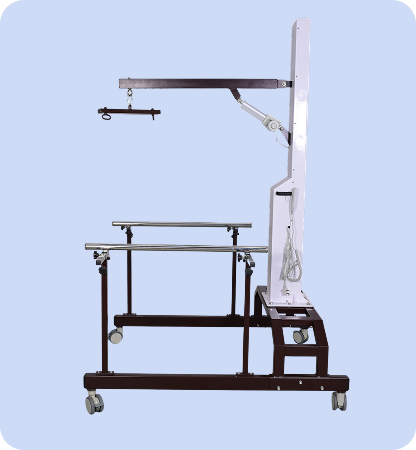
Unweighting systems allow therapists to partially offload a patient's body weight during ambulation training. For post-stroke patients, those recovering from lower limb fractures, or individuals rebuilding strength after spinal procedures, this technology enables early mobilization that would otherwise be unsafe. Early ambulation is strongly associated with shorter hospital stays and lower rates of postoperative complications, including deep-vein thrombosis and muscle atrophy.
Physiotherapy Treatment Tables
Adjustable treatment tables give therapists precise positioning control during manual therapy, electrotherapy, and exercise sessions. Tables that hold firm under repeated loading without flex or drift allow therapists to apply consistent force, a requirement for techniques such as joint mobilization and soft tissue release. Prime Rehab Industries treatment tables are manufactured with heavy-gauge steel frames and high-density foam surfaces rated for clinical use.
Tilt Tables
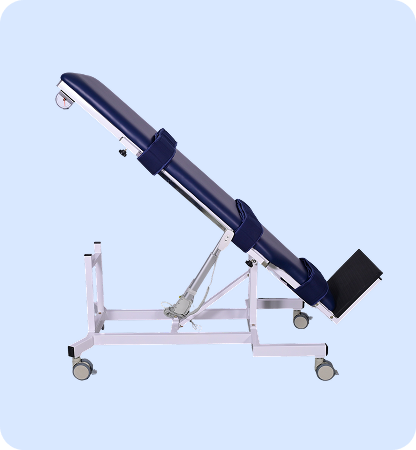
Tilt tables support the critical process of orthostatic reconditioning, gradually reintroducing gravitational stress to patients who have been immobilized. For patients coming out of intensive care, those with autonomic dysfunction, or individuals recovering from prolonged bed rest, the tilt table is often the first piece of equipment they encounter in active rehabilitation. Safe, incremental vertical loading reduces the incidence of orthostatic hypotension and prepares patients for standing and walking far earlier than passive bed rest allows.
Traction and Parallel Bar Systems
Cervical and lumbar traction units address musculoskeletal pain at its source, reducing nerve compression and creating conditions in which active rehabilitation can proceed without constant pain interference. Parallel bars provide the stable framework that gait training requires, with fixed points that allow patients to bear progressive weight through their legs while therapists assess stride, balance, and compensatory movements.
Why Manufacturing Quality Matters in Rehabilitation
Rehabilitation equipment is subject to repetitive loading across hundreds of patient sessions. A treatment table that deflects under weight or a traction unit with inconsistent pull force creates not just a safety risk but therapeutic inconsistency. The therapist cannot replicate yesterday's session, and the patient's progress becomes harder to measure and build upon.
Prime Rehab Industries has been manufacturing rehabilitation and physiotherapy equipment in Chennai for over a decade. Every product undergoes quality checks against clinical performance standards before leaving the facility. For hospitals and clinics sourcing equipment in Tamil Nadu, this local manufacturing advantage means shorter lead times, accessible service support, and the ability to specify customizations like table height ranges, upholstery specifications, and load ratings to match the requirements of a specific department.
Facilities that previously worked with imported equipment often note the difference when they switch to locally manufactured units: faster response to service requests, spare parts that are readily available, and a supplier who can visit the site when a technical issue arises.
If you are evaluating suppliers for your facility, our overview of the best rehabilitation equipment suppliers in Chennai covers what to look for in a long-term partner.
What Clinicians and Patients Say
"We installed the unweighing system from Prime Rehab Industries in our neuro-rehabilitation ward eight months ago. Within the first quarter, we saw our stroke patients achieving independent ambulation an average of five days earlier than our historical baseline. The build quality has held up without a single maintenance call."
— Ramesh Krishnamurthy, Senior Physiotherapist, Coimbatore
"I had a lumbar discectomy and was worried I would need months of restricted activity. The clinic I attended had a proper traction unit and adjustable therapy table. My therapist could work with me systematically. I was back to normal function in eleven weeks — my surgeon said that was ahead of schedule."
— Anitha Rajagopal, Patient, Tiruchirappalli
For a full overview of physiotherapy equipment categories stocked for hospitals and large clinics, see our guide on top physiotherapy equipment for clinics and hospitals in India.
Frequently Asked Questions
What types of rehabilitation equipment are most effective for post-surgical recovery?
The most impactful equipment for post-surgical recovery includes adjustable physiotherapy treatment tables, unweighting systems for early ambulation, parallel bars for gait training, and traction units for spinal decompression. The appropriate combination depends on the nature of the surgery and the patient's baseline function. A physiotherapist will specify which equipment is required for each case.
How does a weighing system improve rehabilitation outcomes?
A unweighting system partially offloads a patient's body weight through a harness and overhead support structure, allowing the patient to practice walking safely before full weight-bearing is medically cleared. This early mobilization prevents muscle atrophy, improves circulation, and maintains the neuromuscular patterns associated with normal gait, all of which translate into faster and more complete recovery.
Can rehabilitation equipment be used in smaller clinics, not just hospitals?
Yes. Prime Rehab Industries manufactures equipment across a range of sizes and specifications, including compact variants of treatment tables and portable traction units suitable for smaller physiotherapy clinics. Equipment selection can be tailored to the available space and the patient case mix typically seen at a specific facility.
How should a hospital evaluate rehabilitation equipment before purchasing?
Key evaluation criteria include load-rated structural integrity, adjustment range and ease of use for therapists, upholstery durability in high-use clinical environments, warranty terms, and the supplier's service response capability. For hospitals in Tamil Nadu, sourcing from a manufacturer based in Chennai such as Prime Rehab Industries offers a practical advantage in terms of delivery timelines and on-site support access.